
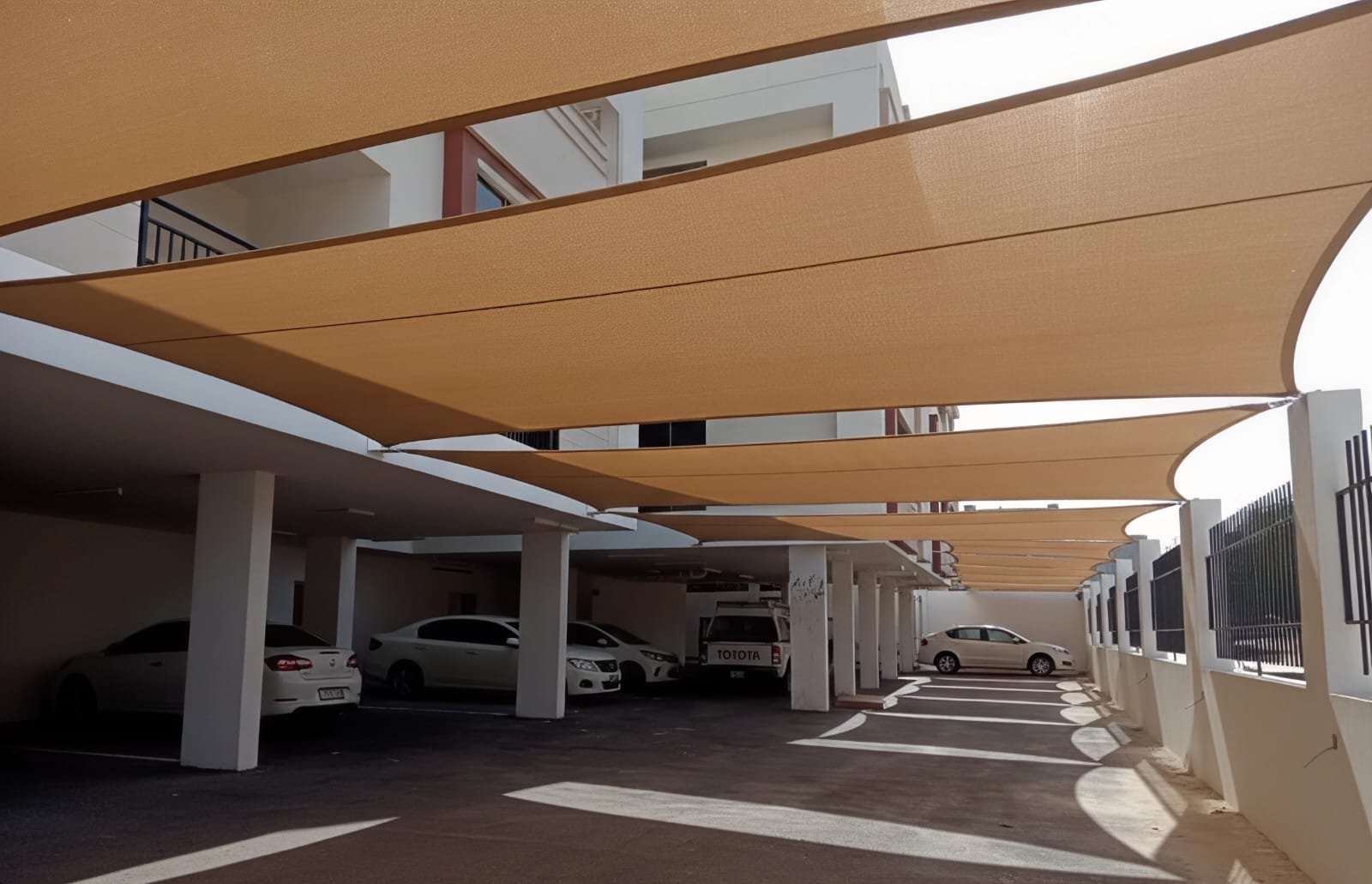
Tensioned Geometry, Clean Visual Finish
Fabric Sail Parking Shades in Saudi Arabia
Fabric sail parking shades are design-led shade canopies built on tension, slope, and anchor accuracy. When the geometry is correct, the result is a clean architectural curve with reliable UV reduction for villas, resorts, and leisure sites.
What makes fabric sail parking shades different
Most “shade sail” pages talk about curves and modern looks, but the real difference is engineering: the membrane must stay under controlled tension, the corners must carry load correctly, and the slope must prevent pooling. This is why fabric sail parking shades are best used where design matters and the site can support proper anchor positions. If you want a frame-first, high-impact solution for commercial rows, use Steel Structure Parking Shades.
Best use cases
- Modern villas, courtyards, and design-focused residential developments
- Hotels, resorts, poolsides, and leisure facilities with architectural intent
- Feature parking zones where the canopy is part of the property look
- Low to moderate traffic parking where anchor zones are controlled
- Projects where “visual finish + shade comfort” matters more than industrial load specs
Typical specifications
Where most sail installations fail
1) Bad slopes = pooling and early fabric fatigue
A sail that looks good on day one can look destroyed after one season if slopes are wrong. Water pooling stretches fabric, breaks tension, and creates permanent sag lines. The fix is simple: correct geometry from the start.
2) Weak corner detailing and cheap tension hardware
The corners carry the load. Low-grade plates, undersized fittings, and weak anchors turn a clean sail into a “flapping sheet.” A real sail system uses proper corner detailing and tension hardware matched to the span. For bay access where rear support matters, see Cantilever Parking Shades.
3) Wrong fabric choice for Saudi heat exposure
Not all fabrics behave the same in long sun exposure. Shade factor, UV rating, and fabric construction affect how the membrane holds tension and color over time. If breathable airflow is your main goal, consider HDPE Parking Shades.
Installation approach
- Site survey + anchor planning
Confirm clear spans, anchor zones, and the exact corners that will carry load. - Geometry + slope design
Define high/low points so the sail drains correctly and keeps tension. - Engineering + detailing
Posts, foundations, corner plates, and hardware sized for load transfer. - Fabrication + preparation
Membrane cutting, reinforced corners, stitching discipline, fittings prep. - Installation + tensioning
Controlled tensioning, final alignment checks, then handover inspection.
Frequently asked questions
Are fabric sail parking shades suitable for heavy traffic commercial parking?
Usually no. Fabric sails are best for design-led sites and low-to-moderate traffic zones. For heavy-use commercial rows, steel structure or heavy-duty systems are typically a better fit.
Do fabric sails provide UV protection?
Yes. UV reduction depends on membrane grade and shade factor. We select material based on exposure and the project’s comfort goal.
Do shade sails need maintenance?
They need periodic inspection for tension, fittings, and cleanliness. When geometry and hardware are correct, maintenance stays straightforward.
Which cities do you serve?
We deliver across Saudi Arabia including Dammam, Al Khobar, Riyadh, and Jeddah.
What do you need to price a fabric sail project?
Send site photos, approximate dimensions, your city, and any design references. If you have a layout drawing, include it for faster anchor planning.