
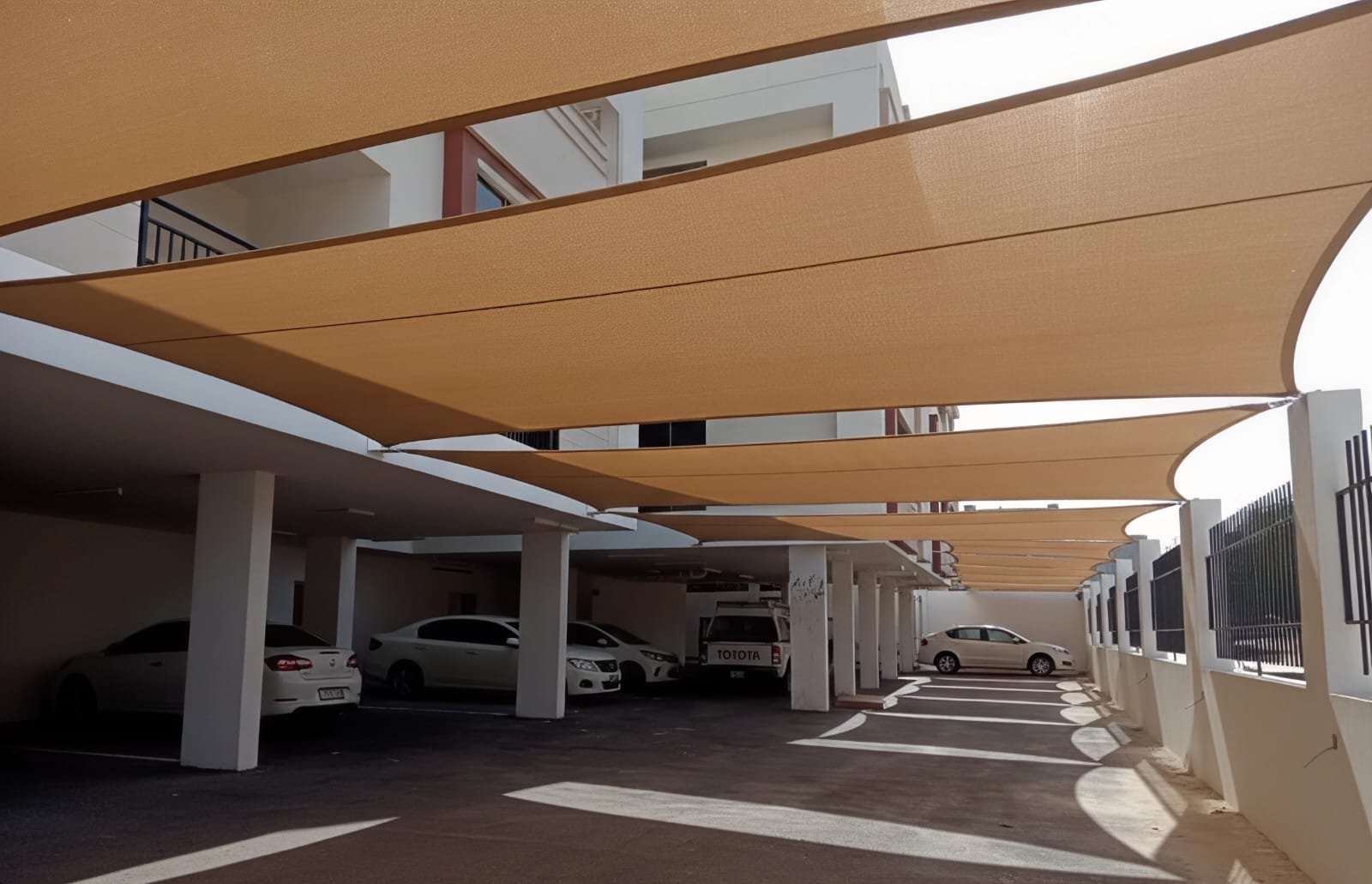
Breathable Shade, Strong UV Blocking
HDPE Parking Shades in Saudi Arabia
HDPE parking shades use breathable shade mesh to reduce heat buildup while still blocking harsh sunlight. They are a practical choice for villas, compounds, schools, and commercial parking areas where airflow under the canopy matters.
Why HDPE fabric is used for parking shades
HDPE parking shades are chosen when you want shade coverage that stays breathable and stable in outdoor heat. The material allows airflow while providing strong UV blocking, helping improve comfort under the canopy and reducing sun impact on vehicles. For a solution focused on maximum heat and UV reduction outcomes, see UV and Heat Protection Parking Shades.
Best use cases
- Villa parking and residential compounds
- Schools, mosques, clinics, and community facilities
- Commercial rows needing breathable shade coverage
- Sites where airflow under shade is preferred
- Projects prioritizing practical performance and easy maintenance
Typical specifications
HDPE parking shade installation in Saudi Arabia
Successful HDPE shade projects start with selecting the correct shade factor for the site and then matching the fixing system to the frame design. After site survey and bay mapping, we confirm fabric orientation, tension direction, and edge detailing so the membrane stays stable under sun exposure and wind.
The HDPE mesh is installed with controlled tension to avoid sagging while still allowing airflow. Stitching, edging, and cable/plate fixing points are designed to reduce wear at stress zones. On coastal or high-humidity sites, corrosion protection on steel members and fasteners becomes critical to maintain long-term performance.
When the membrane grade, shade factor, and fixing method are aligned with the environment, HDPE parking shades deliver reliable comfort, clean appearance, and practical maintenance for daily-use car parks across Saudi Arabia.
What to check before choosing HDPE
Shade factor selection matters
Not all HDPE gives the same results. Shade factor, weave density, and UV rating should match the project intent and exposure. If you want heavy strength for demanding conditions, consider Heavy Duty Parking Shades.
Breathability improves comfort under shade
HDPE supports airflow, which helps reduce trapped heat under the canopy. This is a key reason HDPE is chosen for long-term outdoor use in parking areas.
Structure choice still controls durability
The membrane is only half the story. For defined procurement and repeatable approvals, see Standard Specification Parking Shades. For unobstructed bay access and rear support logic, see Cantilever Parking Shades.
Installation approach
- Site survey and bay mapping
Confirm bay count, circulation, anchor zones, and site constraints. - Membrane selection and detailing
Choose HDPE shade factor, fixing method, and edge finishing level. - Design and layout drawings
Finalize heights, spacing rules, and drainage intent where required. - Fabrication and finishing
Coating consistency, membrane preparation, and tension planning. - Installation and handover
Alignment checks, tension verification, final inspection.
Frequently asked questions
Is HDPE better than PVC for parking shades?
It depends on the goal. HDPE is breathable and works well for airflow under shade. PVC may be preferred when different finishing or water behavior is required.
Does HDPE provide UV protection?
Yes. HDPE shade mesh can provide strong UV blocking, depending on the selected shade factor and material grade.
Can HDPE parking shades handle strong wind?
Yes, when the membrane grade, fixing system, and frame engineering are aligned to the site exposure. Wind performance depends on design and installation quality.
Which cities do you serve?
We deliver across Saudi Arabia. Coverage pages include Dammam and Riyadh, and other cities based on project scope.
What do you need to price an HDPE parking shade project?
Send bay count, approximate dimensions, site photos, and your city. Mention if you want a specific shade factor or airflow preference.