
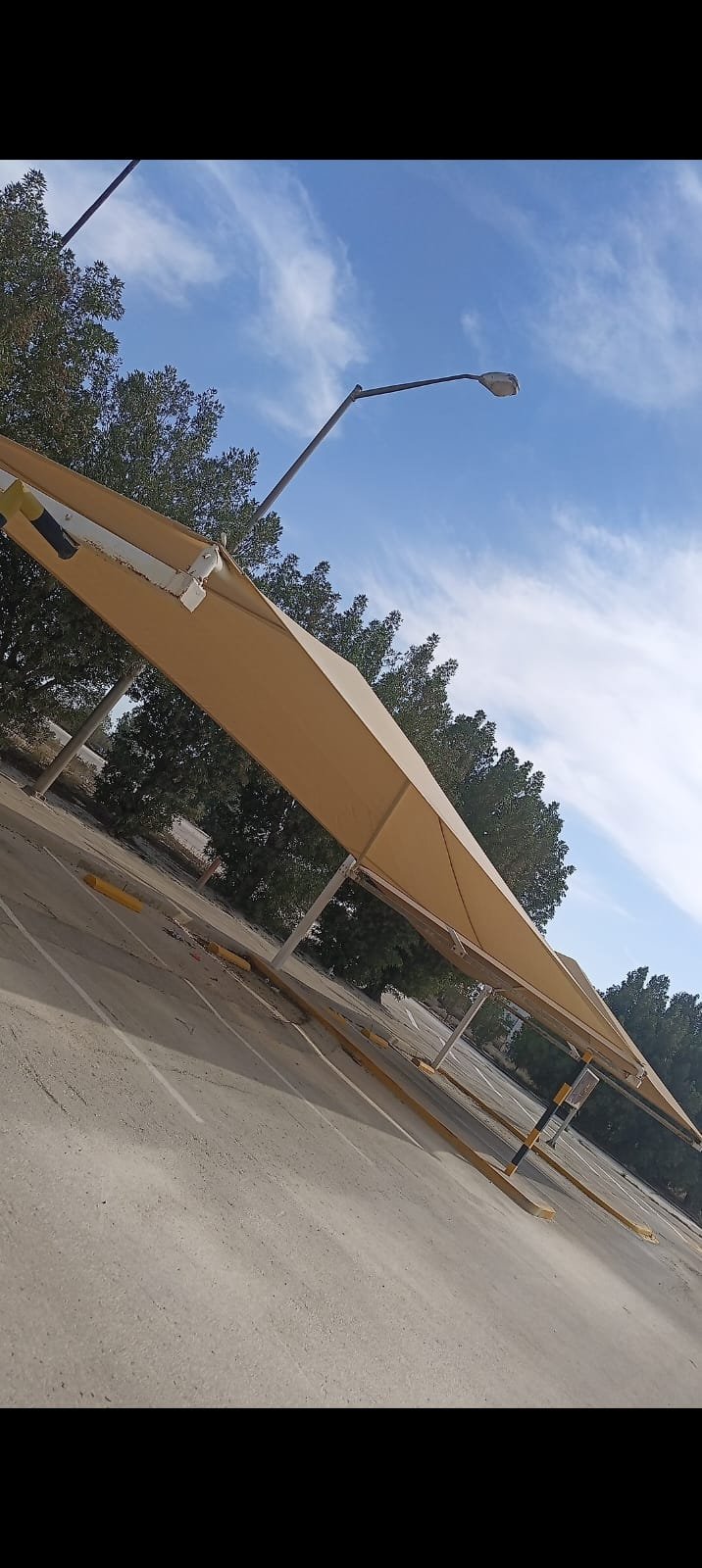
Open Clearance · Engineered Mounting
Cantilever Sun Shades in Saudi Arabia
Cantilever Sun Shades create an open shaded footprint with no front columns—ideal for seating areas, walkways, and entrances where circulation must stay clean.
Why cantilever sun shades are installed
Cantilever Sun Shades are installed when you need shade without columns interrupting the usable area. They are used for café seating, courtyard edges, building walkways, entrances, and outdoor waiting zones. The benefit is an open footprint; the requirement is disciplined anchoring and correct load transfer through the mounting.
Best use cases
- Outdoor seating zones (villas, cafés, terraces)
- Walkways and building connections
- Entry canopies and drop-off points
- Courtyards and waiting areas
- Commercial sites that need open circulation
Typical specifications
What makes cantilever systems safe and premium
Anchoring and foundation discipline
Cantilever designs concentrate load into fewer support points. If the base is weak, the whole system is weak. Proper base preparation, anchor selection, and tightening/inspection steps are what keep the canopy stable over time.
Straight lines and finishing quality
Cantilever shades look premium only when alignment is consistent: clean levels, correct slopes, uniform edge detailing, and tidy connection hardware. For outdoor living coverage with a softer footprint, see Patio & Garden Sun Shades.
Membrane selection for heat and maintenance
Shade performance depends on the project goal: heat reduction, UV protection, and cleaning frequency. HDPE is often selected for breathable shade; PVC is often selected when a more enclosed, wipe-clean surface is preferred (project dependent). For architectural fabric styling, see Sail Style Sun Shades.
Installation approach
- Site survey and clearance planning
Confirm circulation routes, shade zones, and safe overhead clearances. - Layout and levels
Set canopy heights, slopes (for water control), and mounting positions. - Engineering and anchoring
Finalize base plates, anchors, embed/bolt logic, and connection detailing. - Fabrication and finishing
Controlled fabrication, coating discipline, membrane cutting and edge finishing. - Installation and handover
Erection, alignment checks, torque/fastener inspection, and final handover.
Frequently asked questions
Are Cantilever Sun Shades safe in strong wind?
Yes, when engineered and anchored correctly. Wind exposure is considered during design and the mounting/anchoring system is specified accordingly.
Do cantilever shades require more engineering than standard shades?
Yes. Cantilever systems concentrate load into fewer support points, so anchoring and base detailing are critical.
Can cantilever shades be installed for walkways and entrances?
Yes. They are commonly used for walkways, seating zones, and entrances where you want an open footprint with clean circulation.
Can you match the canopy look to the site design?
Yes. Height, profile, membrane type, and finish details can be aligned to the site’s architectural intent and maintenance expectations.
What do you need to price a cantilever sun shade project?
Share site photos, approximate span/area, where you want shade, and surface condition (concrete/tiles/landscape). This is required to plan anchoring correctly.