
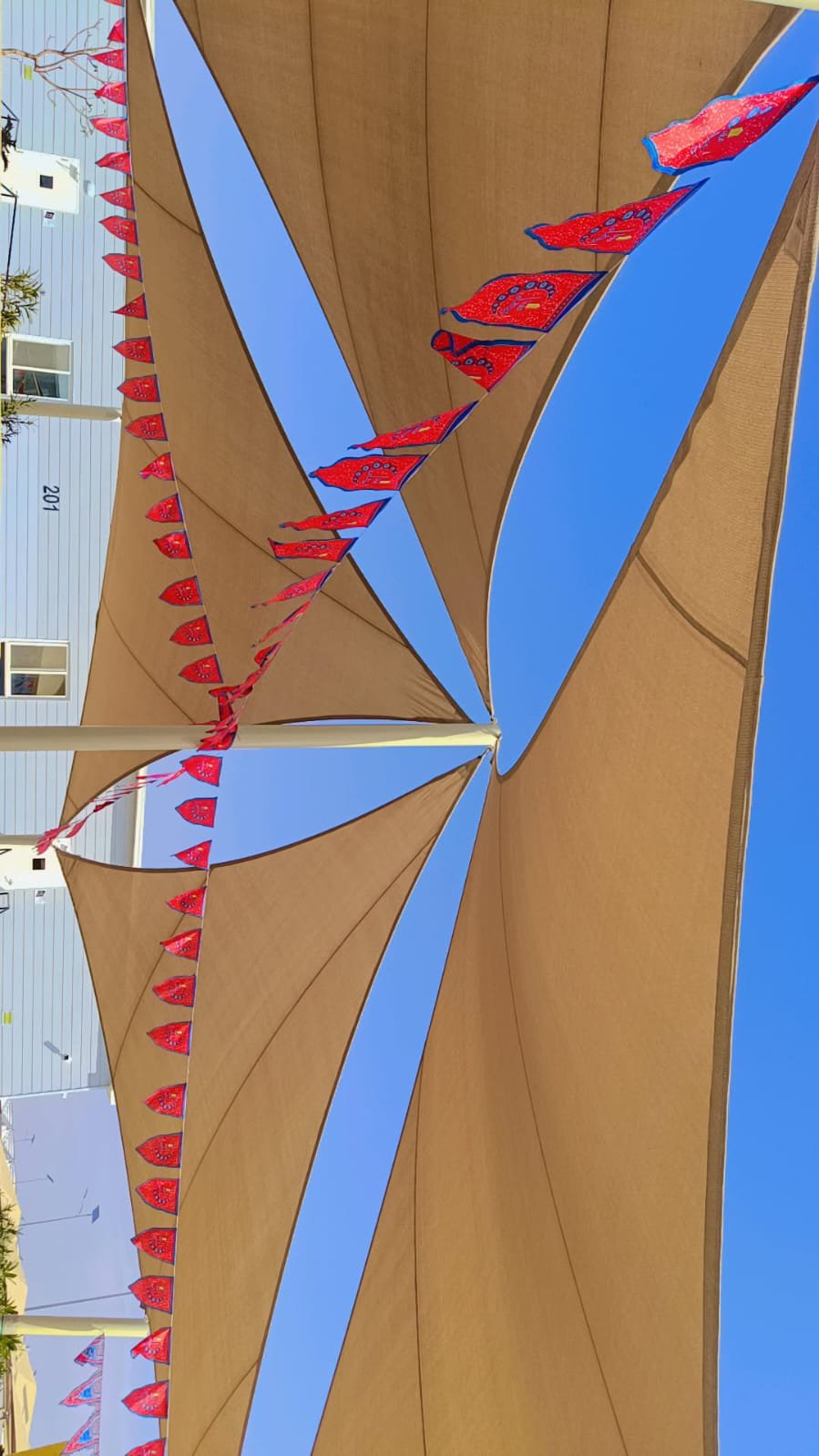
Tensioned Membranes · Planned Slope · Clean Outdoor Aesthetics
Sail Style Sun Shades in Saudi Arabia
Triangular and custom shade sails designed for stable tension, controlled slope, and practical UV reduction—ideal for modern outdoor seating, walkways, and leisure spaces.
Why sail style sun shades are chosen
Sail style sun shades are selected when the client wants shade that looks architectural instead of “boxed”. The membrane geometry creates clean lines and visual lightness while still reducing direct sun exposure in seating and circulation areas. But sail shades only perform when three things are designed properly: anchor positions, tension paths, and slope.
If you want a structured, daily-use outdoor shade system with a more “built” feel, use Patio & Garden Sun Shades. If you need a clear footprint without posts inside the usable area, use Cantilever Sun Shades.
Best use cases
- Villa gardens and outdoor seating zones
- Courtyards and terraces with modern design intent
- Walkways and entrances where light structure is preferred
- Resorts, cafés, and leisure facilities
- Pool seating zones and shaded waiting areas
Typical specifications
What makes sail shades last and look premium
Planned slope to avoid water pooling
A sail is not “flat fabric”. It needs a clear height difference between corners so water runs off. Slope planning is part of the design stage—if you ignore it, you get sagging pockets and ugly staining.
Correct tension paths and edge finishing
Premium sail shades look tight and intentional. The edges must be reinforced, the fittings must align with the tension direction, and the final tension must be set properly so the sail stays stable instead of flapping.
Anchors and posts that match exposure
The anchors carry the load. If the site has high exposure or long spans, you cannot “cheap out” on posts and fixings. For wide-area structured layouts, use Multi-Bay Sun Shade Structures.
Installation approach
- Site survey and anchor mapping
Confirm safe fixing zones and obstacle clearance. - Design and coverage planning
Set sail geometry, shade target, and slope direction. - Engineering and detailing
Finalize anchors/posts, foundations, and hardware selection. - Fabrication and preparation
Membrane cutting, edge finishing, fittings preparation. - Installation and handover
Install posts/anchors, tension the sail, verify slope and stability.
Frequently asked questions
Do sail shades need slope?
Yes. Proper slope prevents water pooling and helps the membrane maintain stable tension and a clean appearance.
Will sail shades flap in wind?
Poorly tensioned sails flap. Proper design (anchors + tension direction) and correct installation keeps the sail stable and reduces wear.
Can you make custom sizes and shapes?
Yes. We design triangular and custom sail layouts based on the space, shade target, anchor constraints, and slope requirements.
Which cities do you serve?
We deliver across Saudi Arabia. Share your city and site photos to confirm access, scope, and installation conditions.
What do you need to price a sail shade project?
Send photos, approximate dimensions, your city, and the area you want shaded. Mention if you prefer wall anchors or free-standing posts.