
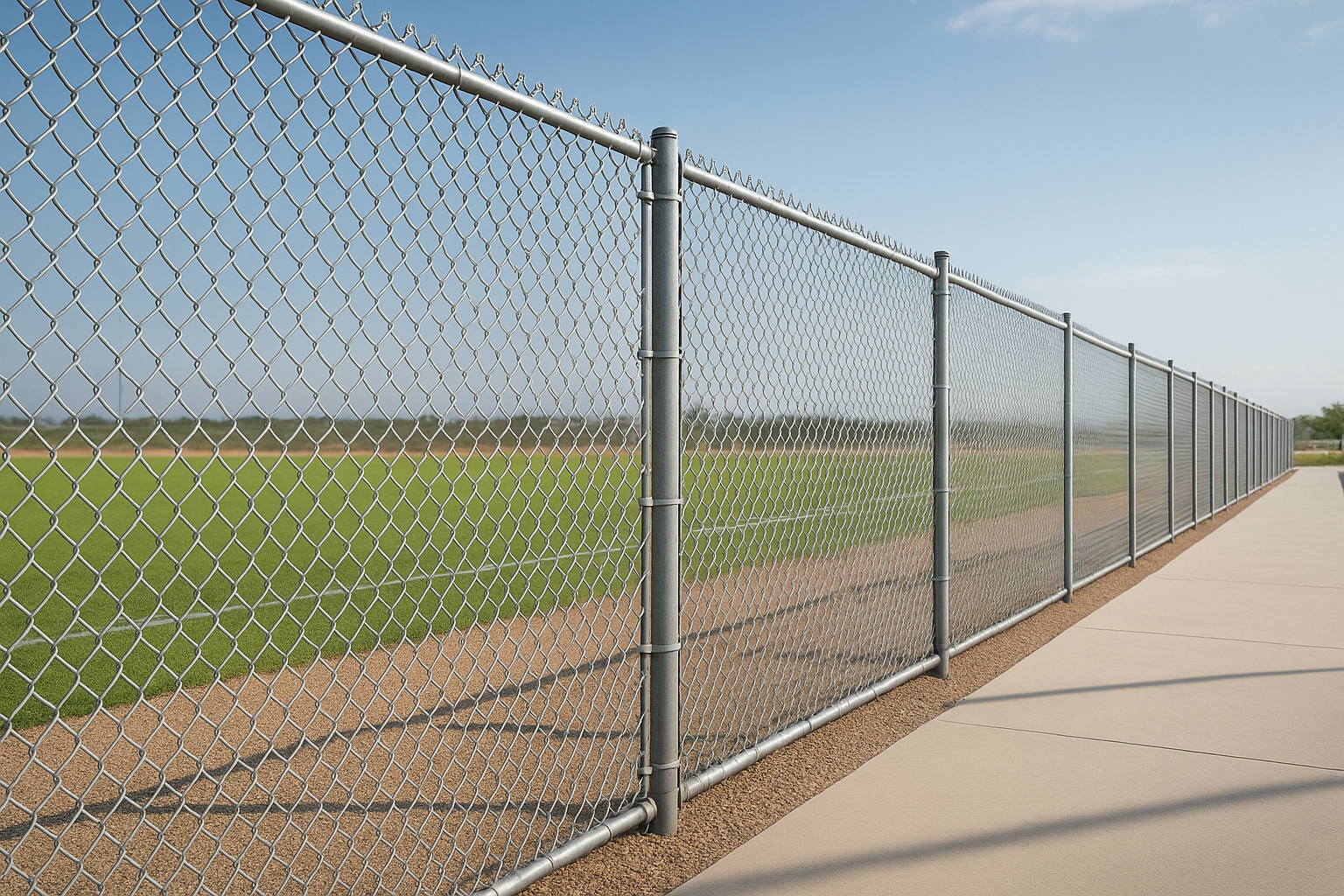
Cost Effective Perimeter Control
Chain Link Fences in Saudi Arabia
Chain link fencing is the fastest way to define a perimeter when you need visibility, airflow, and long boundary runs. The quality comes down to straight post alignment, correct corner bracing, and clean mesh tensioning—otherwise it sags and looks like a failed site.
What this page covers
This page covers chain link fences for industrial yards, warehouses, logistics plots, sports facilities, and service compounds. Chain link is chosen when you need cost-effective perimeter control with clear visibility and flexible gate integration.
What good chain link fencing delivers
- Defined perimeter: supports access control and site order.
- Visibility + airflow: easier supervision with lower wind resistance than solid walls.
- Corrosion protection: galvanised finishes suited to outdoor exposure.
- Clean tensioning: straight fence line without sagging mesh.
- Security options: height strategy, gates, and deterrents based on site risk.
Typical specifications
Where chain link fences go wrong
Sagging mesh = failed install
Sagging happens when posts are misaligned, corners aren’t braced, or mesh tensioning is rushed. A sagging fence line looks weak, performs poorly around gates, and becomes easier to breach.
Corners and gates decide stability
Most long-run movement starts at corners and gate posts. If the base setting and bracing are weak, the line drifts over time. We treat corners, ends and gates as structural points—not “extra accessories.”
Common applications
- Industrial sites: factories, yards, storage plots, logistics zones
- Sports facilities: courts and fields requiring boundary control and visibility
- Service plots: perimeter definition and controlled access
- Utility zones: infrastructure boundaries and service compounds
- Commercial back-of-house: equipment yards and service areas
Security and performance options
- Height strategy: select height based on exposure and site risk profile.
- Top deterrents: deterrent options can be added where security must be stronger.
- Gate integration: swing or sliding gates matched to daily operations.
- Screening: optional screening if visibility needs to be reduced.
- Coastal exposure: finish selection aligned to salt air and maintenance expectations.
Installation approach
- Site survey
Perimeter length, levels, corners, and gate locations. - Layout planning
Fence line marking and access planning based on site use. - Post setting
Base preparation and corner bracing for long-term stability. - Mesh tensioning
Controlled tensioning so the fence stays straight and functional. - Handover
Final inspection and gate operation checks.
Frequently asked questions
Is chain link fencing suitable for industrial sites?
Yes. It’s widely used for industrial yards and warehouses because it’s cost-effective, visible, and scalable for long boundary runs.
Can chain link fences be used for sports facilities?
Yes. Chain link is common for courts and fields because it provides control while keeping visibility and airflow.
What finish is best for outdoor exposure?
Galvanised finishes are standard for corrosion protection. For higher exposure (e.g., coastal sites), we can recommend upgrades based on conditions.
Can you add gates and deterrents?
Yes. Gates, height options, screening, and deterrents can be planned based on the site risk profile and daily operations.
What should I compare it with?
For higher-security sites compare High Security Anti Climb Fencing. For privacy-first boundaries compare Concrete Panel Fences.