
Perimeter Security Systems
High Security Anti Climb Fencing in Saudi Arabia
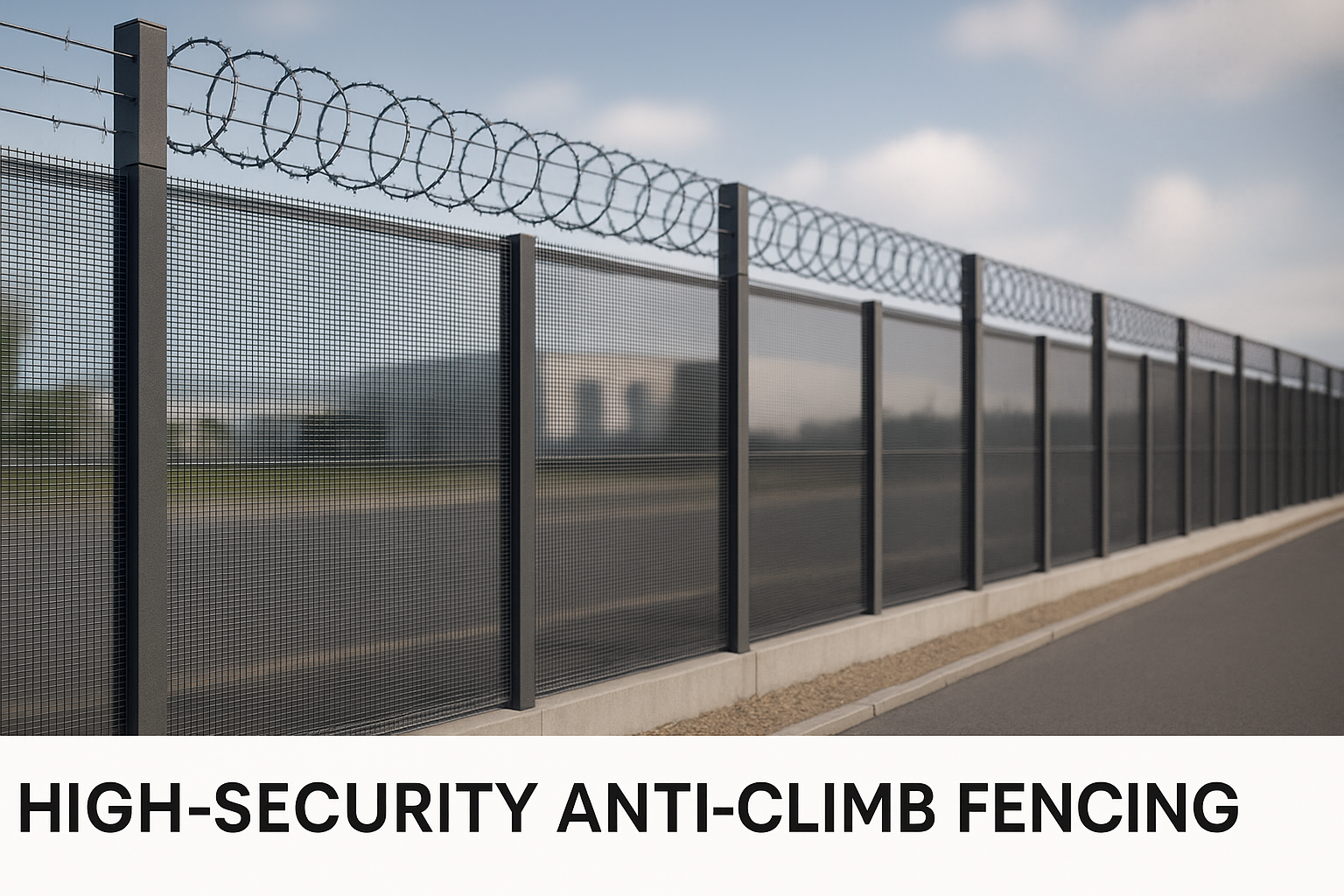
High security anti climb fencing is used when standard fencing is not acceptable. Rigid panels, strong posts and fixings, and clean gate integration keep the perimeter consistent and harder to exploit on industrial, government and commercial sites.
What this page covers
This page covers High Security Anti Climb Fencing for perimeter protection where stronger deterrence and controlled access planning are required. The system is designed to reduce footholds, resist deformation, and keep weak points from forming at corners and gates.
High Security Anti Climb Fencing performance factors
- Reduced footholds: mesh geometry and detailing designed to discourage climbing.
- Rigid panels: stable fence line that resists flexing and deformation.
- Strong posts and fixings: connections that do not become the weak point.
- Corrosion protection: finishes selected for coastal and industrial exposure.
- Gate integration: access points designed to match the fence security level.
Typical specifications
Where weak fencing fails security
Most failures happen at fixings and corners
Cheap systems focus on panel price and ignore posts, fixings and alignment. Those are the parts that get tested. If the fence line loosens, flexes or creates gaps, it stops being a deterrent and becomes a boundary only on paper.
A fence line is a system, not panels in the ground
Anti climb performance depends on consistent height, correct ground clearance, proper corner detailing, and access control at gates. The perimeter must be planned as one continuous security line without obvious weak points.
Common applications
- Industrial facilities: factories, yards, storage compounds, loading areas
- Utilities: substations, water facilities, telecom and infrastructure zones
- Government and critical sites: controlled perimeters and restricted access areas
- Commercial protection: warehouses, logistics hubs, high value storage
Security options and scope items
- Gate planning: swing or sliding gates matched to security needs and operations.
- Clear zone planning: visibility setbacks and perimeter cleanliness to support monitoring.
- Height strategy: selected based on risk profile and perimeter exposure.
- Coastal upgrades: finish upgrades where salt air accelerates corrosion.
- Continuity detailing: corners, slopes and transitions designed to avoid climb opportunities.
Installation approach
- Site survey
Perimeter measurement, ground conditions and gate locations. - Layout and security scope
Fence line planning, access points and risk based recommendations. - Material selection
Panel type, post specification and corrosion protection aligned to exposure. - Installation
Post setting, panel alignment, fixing integrity checks and gate integration. - Handover
Final inspection and scope documentation.
Frequently asked questions
What makes a fence anti climb?
Anti climb fencing uses mesh geometry that reduces footholds, combined with rigid panels and strong posts/fixings that resist force.
Is anti climb fencing suitable for industrial sites?
Yes. It is commonly used for warehouses, yards, utilities and critical facilities where perimeter security must be stronger than standard fencing.
Can you integrate gates with the fence system?
Yes. Gates and access points are planned to match the fence security level so the perimeter does not become weak at entrances.
How do you protect fencing from corrosion in coastal areas?
Galvanising is used as a baseline, and coating upgrades are recommended based on exposure and maintenance expectations.
What should I compare it with?
For lower cost visibility fencing compare Chain Link Fences. For corrosion resistance in harsh exposure compare GRP FRP Composite Fencing.